
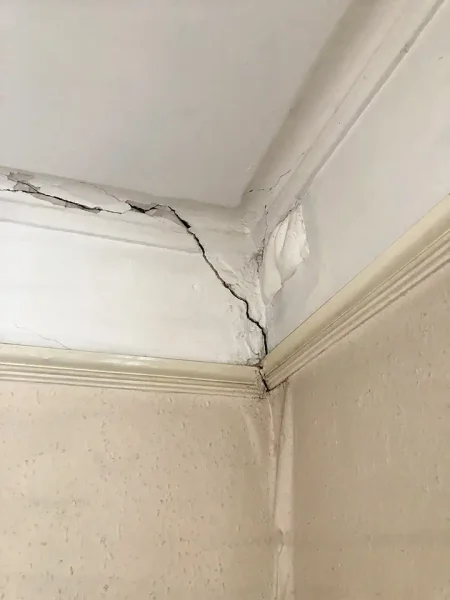
 When is a Crack Just a Crack?
Cracks in walls, ceilings or floors can be unsettling. Whether you’re a homeowner, facilities manager or developer, spotting a line zig-zagging across the wall naturally raises questions: Is this harmless? Or is this telling me something important? At Peter Dann, we help clients understand that while many cracks are simply cosmetic, others can be early signs of underlying issues. Knowing the difference is key, and that’s where a plain-language understanding of structural cracks becomes invaluable.
In this guide, we break down how visible clues in buildings are interpreted and how engineers distinguish minor, everyday movement from situations that truly require expert attention.
It may come as a surprise, but almost all buildings show cracks at some point. Materials expand and contract, foundations settle, and temperature and humidity naturally fluctuate. Many structural cracks are simply a by-product of how buildings live and breathe.
Minor cracks can occur because:
These cracks may look dramatic, but often aren’t a reason to worry.
However, some cracks can be symptoms of deeper issues. Distinguishing harmless blemishes from warning signs is exactly what a structured inspection is designed to achieve.
When engineers assess cracks, they don’t just look at the surface. They interpret patterns, locations and behaviours — almost like reading a building’s body language. Here are a few indicators that help differentiate between cosmetic and potentially serious structural cracks:
Hairline cracks less than 1 mm wide are usually cosmetic. Larger cracks, especially those exceeding 5 mm, may require closer examination as part of a formal defect assessment.
Diagonal cracks around windows or doors often indicate movement in the building fabric, as illustrated in the below photo. 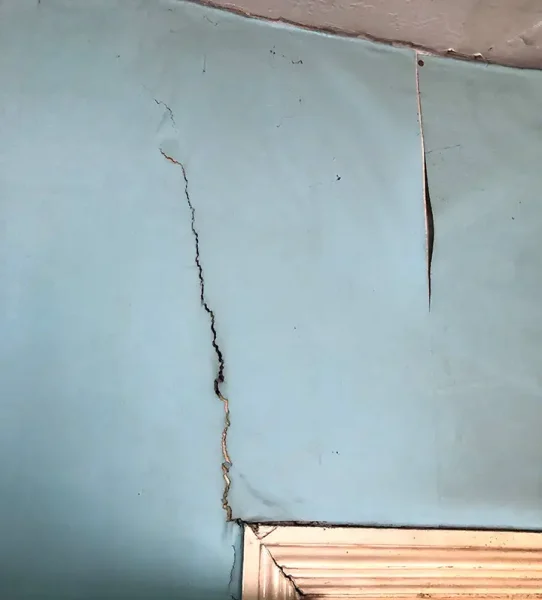
Vertical cracks can relate to settlement.
Horizontal cracks may be more concerning, sometimes hinting at structural shifting or lateral pressure.
Cracks near foundations, load-bearing walls or structural beams warrant attention. Engineers consider whether the crack aligns with known load paths or structural elements.
A crack that remains stable might be benign. A crack that grows, quickly or gradually, should prompt a structural inspection to understand what’s driving the movement.
Most cracks fall into the “don’t panic” category. But some may point to issues such as:
This is where experienced engineers apply context, judgement and investigative skills to deliver a reliable defect assessment.
At Peter Dann, our approach combines visual inspection with targeted tools, such as crack monitors, moisture readings and ground or structural surveys, to build a complete picture.
You don’t need an engineer for every crack you see, but you also don’t want to ignore the early signs of something more serious. It’s time to seek advice when:
A timely structural inspection can prevent small issues from becoming costly problems later. Engineers don’t just diagnose issues; they also provide practical solutions, whether that’s monitoring, repair guidance or more in-depth structural support.
A proper defect assessment doesn’t treat cracks in isolation. Engineers consider the whole building:
By answering these questions, engineers can determine whether structural cracks are merely surface-level imperfections or indicators of a deeper conversation the building is trying to have.
Cracks can be worrying, but they don’t have to be. With expert insight, most issues can be understood — and often resolved — quickly. Many serious masonry problems can be resolved with crack stitching (helical bars), as shown in the below photo. 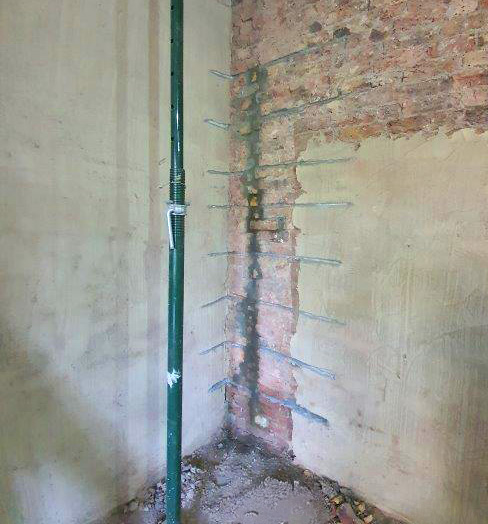
At Peter Dann, our goal is to help clients make informed decisions, offering clear explanations and dependable guidance through every structural inspection and defect assessment we undertake. If you’re concerned about your property, be it residential or commercial, contact us for advice or an assessment.